This article was lifted from the Peoria Journal Star on March 31:
A pileated woodpecker drums on a distant tree. Wooded river bluffs buffer sight and sound of the outside world. Four white-tailed deer leap deeper into the underbrush. A red-tailed hawk loops on warm spring thermals high overhead.
The newest trail in the Peoria Park District network is now open and unfolding with early signs of spring. Robinson Park North represents years of work, planning and cooperation between public and private efforts. It is a link in what will become the park district's longest hiking trail, the Illinois River Bluff Trail, from Detweiller Park north through Green Valley Camp, through a tunnel under Illinois Route 6, across Robinson Park South through Robinson Park North to Camp Wokanda. Once completed, the entire hiking trail will be almost 15 miles one way.
On Monday, the Peoria Park District received notification that the Illinois Department of Natural Resources had approved a grant for half the purchase price of the connecting property linking Robinson Park North and Robinson Park South. That link had been acquired by Forest Park Foundation in 2001 from the estate of Hudson Sours. The foundation has offered to donate the other half of the purchase price. The property is expected to be appraised at more than $600,000.
The new hiking trail through Robinson Park North was designed by Mike Friberg, landscape architect and planner with the park district.
"I grew up in California, attended University of Wisconsin at Madison and find I have a special affinity for oak woodland bluffs. This is an amazing trail. Every once in a while, you get a glimpse of the river valley below. Squint your eyes and pretend you're walking a couple of hundred years ago," Friberg said.
"I got really excited when Green Valley Camp was acquired. That was the last piece of the puzzle."
The Peoria Park District acquired Green Valley Camp from the Salvation Army in March 2003. It provided the missing link connecting sections of the trail. Friberg expects the trail through Green Valley will be completed by 2010. The section of trail through Robinson Park South is currently under construction.
Friberg and John Mullen, naturalist with the Peoria Park District, walked the 3-mile Robinson North section of the trail on a Friday morning in late March.
Mullen pointed out the trail's progression through an evolving woodland with invasive species spreading over the areas of the land once grazed by livestock. That disturbed terrain has maples, cottonwoods, black locust, honey locust and sycamore trees. The trail continues past a prized white oak on a hill prairie. Signs of multiflora rose help distinguish which areas of the trail were once grazed.
"There is a quietness that takes over on this trail," Mullen said, noting the bur oak and chinquapin oak along the trail.
Boy Scouts and volunteer park stewards have worked on restoration of the hill prairie, which now includes little bluestem, leadplant and woodland sunflower.
"We are dependent on help from these volunteers to open and maintain the prairie and allow the sun to get down to the woodland floor," Friberg said.
Mullen said hikers on this trail can note the different forest composition and perceive the impact civilization has had on this land. Some sections are solid black locust and shrubs. Another invasive species noted on this early spring walk was garlic mustard along some sections of the trail.
An isolated bench on a bluff over the hill prairie is ideal for watching sunsets, Mullen said.
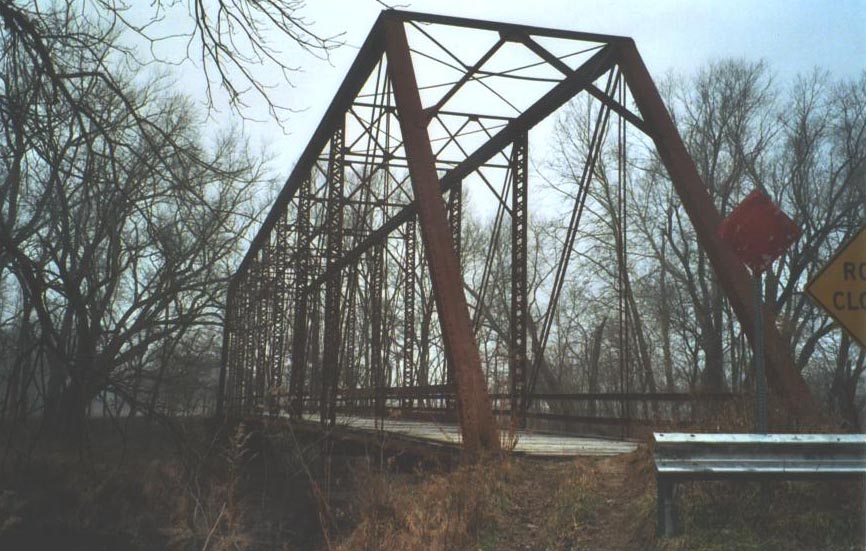
Six months ago, a 130-foot-long bridge was positioned on the trail across a 60-foot-deep ravine. The bridge is made with low-maintenance, weathering steel, which already has turned a ruddy rust color.
Along the trail, Mullen and Friberg analyzed the furry remains of what they speculated was a squirrel consumed by a coyote or fox.
They said Camp Wokanda, the northernmost section of the Illinois River Bluff Tail, will have the first handicapped-accessible campground in the Peoria Park District system.
Friberg said the oldest, southernmost section of this trail is Detweiller Park, which dates back to 1927. The northernmost section is Camp Wokanda, which was acquired from the Boy Scouts.
"With the most aggressive work schedule, the entire trail will be completed by 2010. When completed, this will be the longest trail in the Peoria Park District. It's one thing to drive Route 6 and enjoy these river bluffs, but to really enjoy the uniqueness of this trail, you have to get out there and hike," Friberg said.
"It is these river bluffs that make Peoria so special. These river bluffs attracted me to the area. My dream . . . I'd love to see a 20-year plan someday connecting Grand View Drive north to Wokanda. Maybe that's a 50-year plan or a 100-year plan, but the more people who get out and hike these wonderful trails, the more possible that dream becomes."
Conservationist Bill Rutherford, 91, whose family started Forest Park Foundation, suggested that renaming Robinson Park to Robinson-Morron Park would more accurately reflect major gifts from the Jean Morron estate that financed significant portions of the park land acquisition.